Dossiers
If America Stands Back: NATO, Article 5 and the War Europe Could Be Forced to Fight Alone
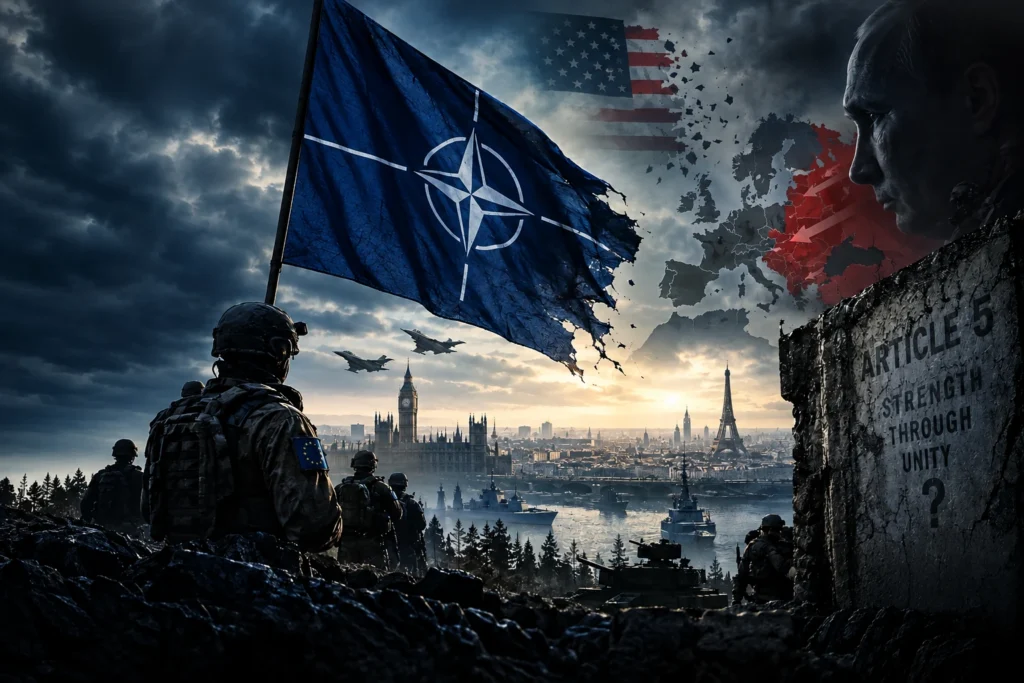
What happens to NATO’s Article 5 if the US won’t fight? The enablers gap, the $1 trillion shortfall, and four scenarios raised by Sky’s The Wargame.
GUGI Undersea Cable Sabotage Plot: What the Evidence Shows

What is the GUGI undersea cable sabotage plot? Trace the Svalbard report, official statements and the evidence behind the alleged Russian capability.
Six Months Under Mojtaba Khamenei: Who Actually Rules Iran?

Six months after Ali Khamenei was killed, Mojtaba formally rules Iran. The evidence shows a harder security state — but not who holds the final word.
2010s — The Algorithmic Era

Ranking and recommendation systems shape exposure. Effects vary by platform, data, design and user context.
2000’s — The Security Reset

Security institutions and screening systems expanded materially. Scope, legality and effectiveness remain programme-specific.
Middle East Escalation: Who Lit the Fuse — and Who Walks Away?
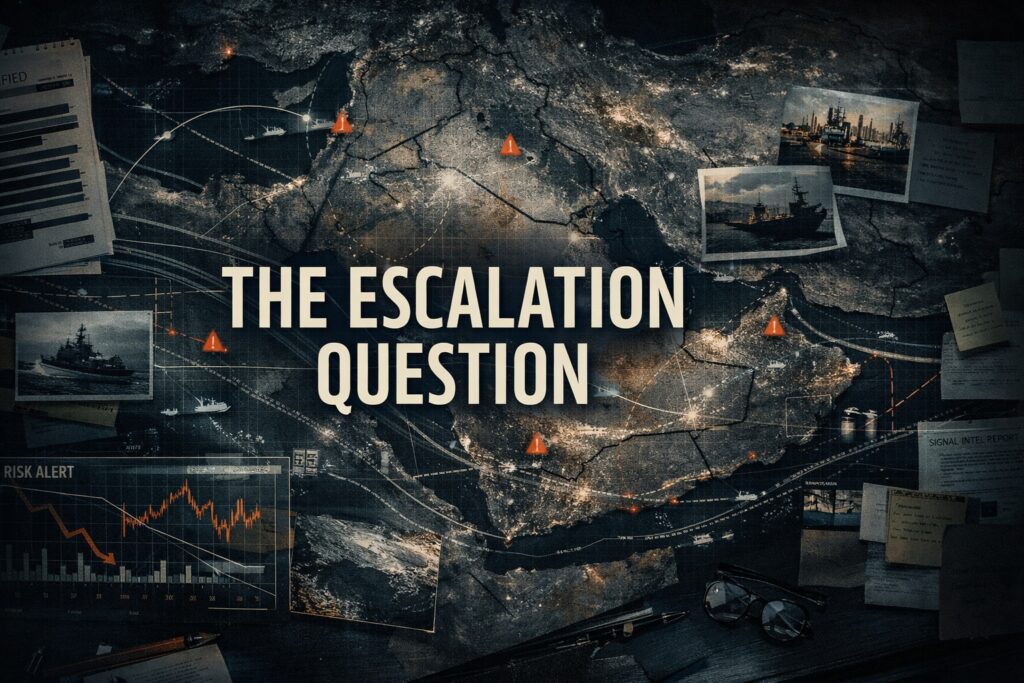
The sequence is documentable; responsibility, intent and durable settlement remain contested across interested parties and dated reports.
1990s — The Internet Era
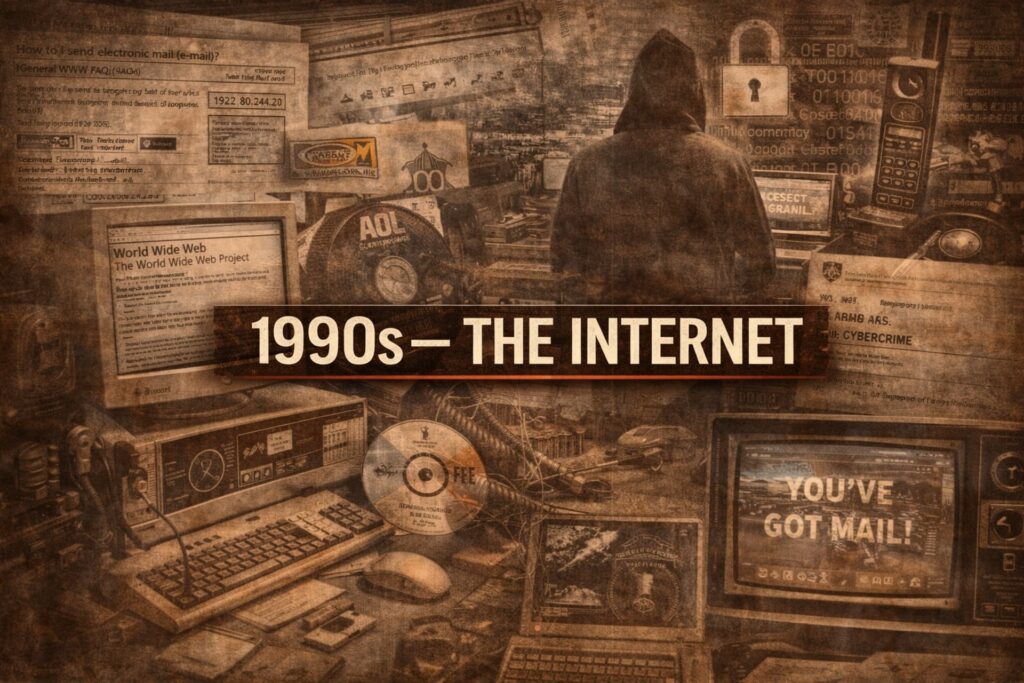
The Web expanded public access while law, profiling and communications security evolved beside it. Parallel change is not proof of one master plan.
1980s — Corporate Intelligence
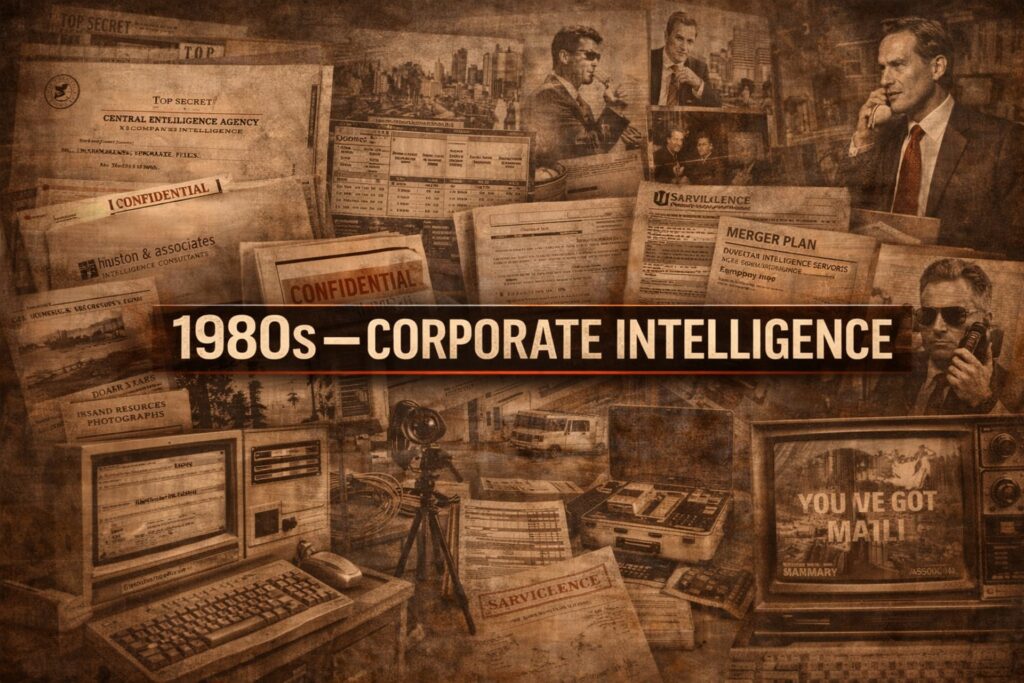
The Corporate Intelligence record shows directives, contractors and unofficial channels interacting with formal institutions. It does not establish that corporations replaced the state.
1970s Surveillance Architecture
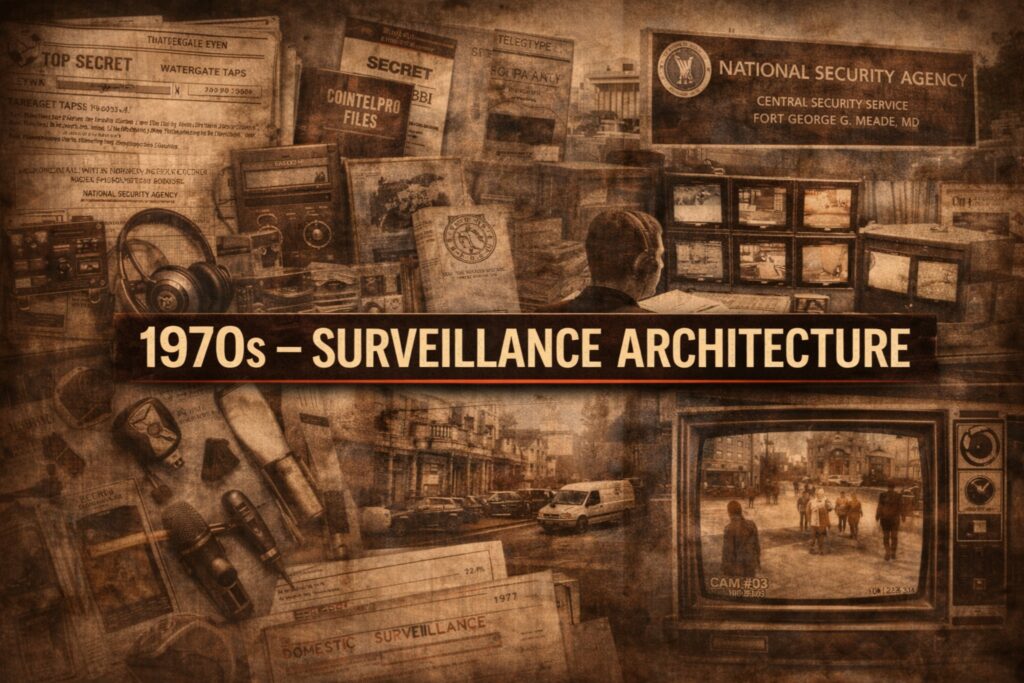
1970s surveillance architecture is the legal and institutional framework that emerged after the United States exposed intelligence abuses by the CIA, FBI, NSA, IRS, and other federal agencies. The decade did not end surveillance power. It converted scandal into procedure, executive restraint, permanent congressional oversight, classified courts, and recurring renewal battles.
1960s — Psychological Warfare
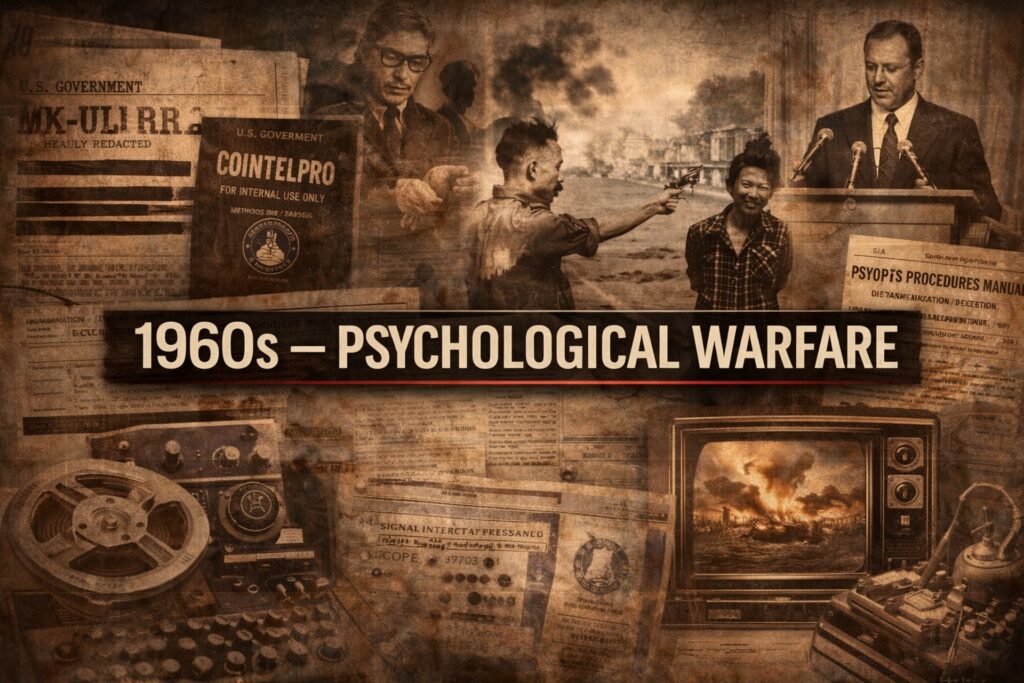
Psychological Warfare placed information, legitimacy and dissent inside national-security practice. The record demonstrates programmes and documents—not total command of public belief.
1950s — The Cold War Laboratory
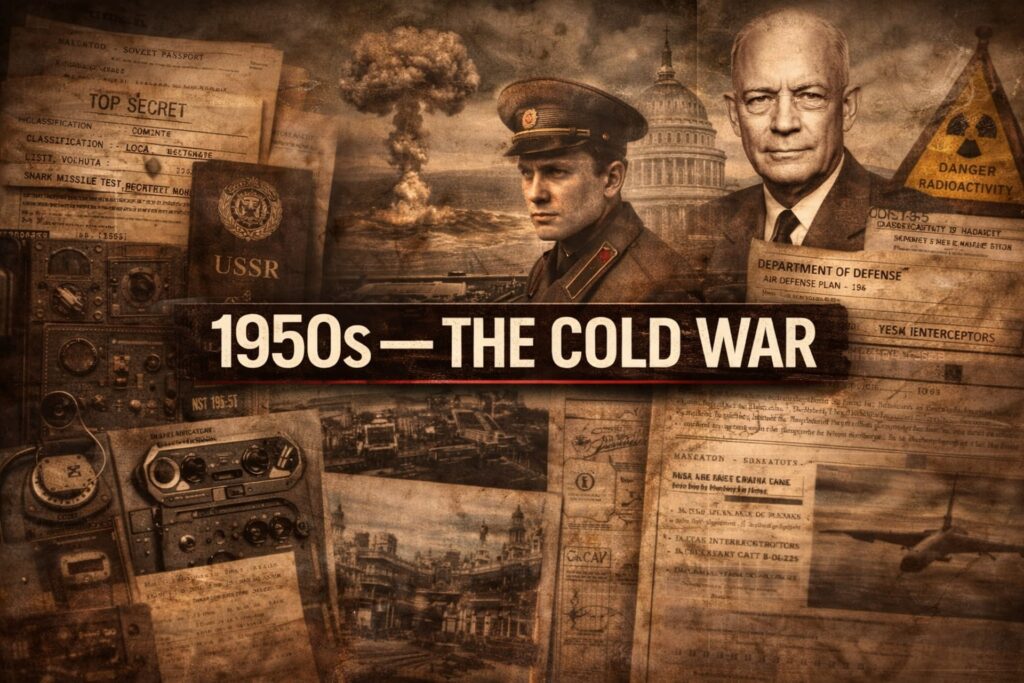
The Cold War Laboratory record documents mobilization doctrine, covert action and behavioral experimentation. It does not expose every internal decision or prove a fully mature later security state.
1940s — The Intelligence State Is Born
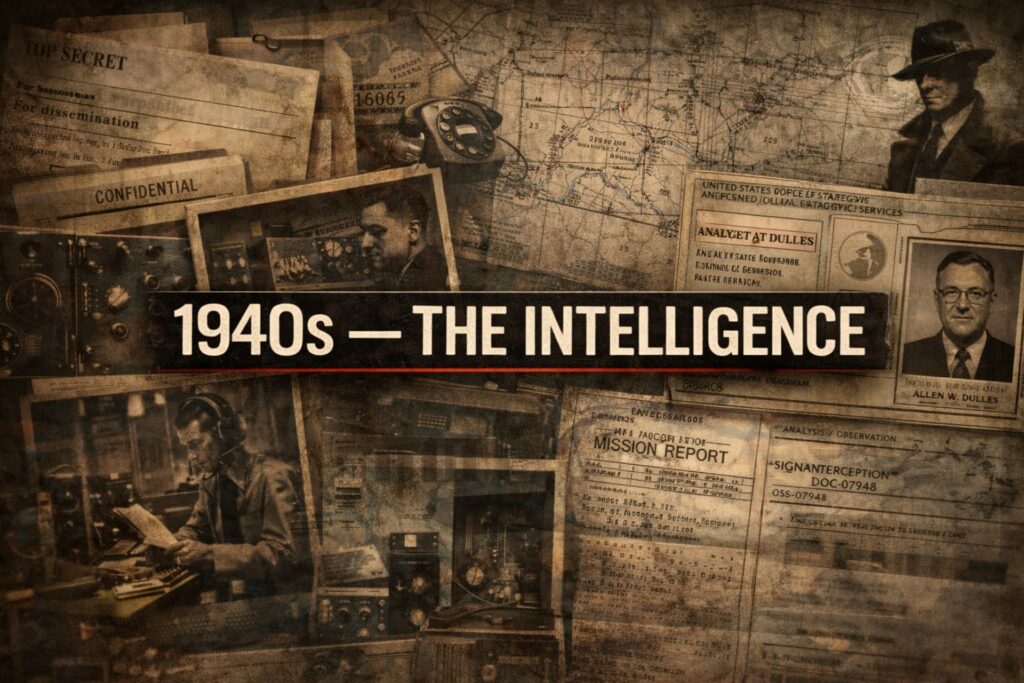
The 1940s created a durable Intelligence State architecture and authorities. The sources document that settlement, not a fully finished version of every later capability.