
Digital Control Grid
Digital ID & Programmable Money: Building the Global Control Grid
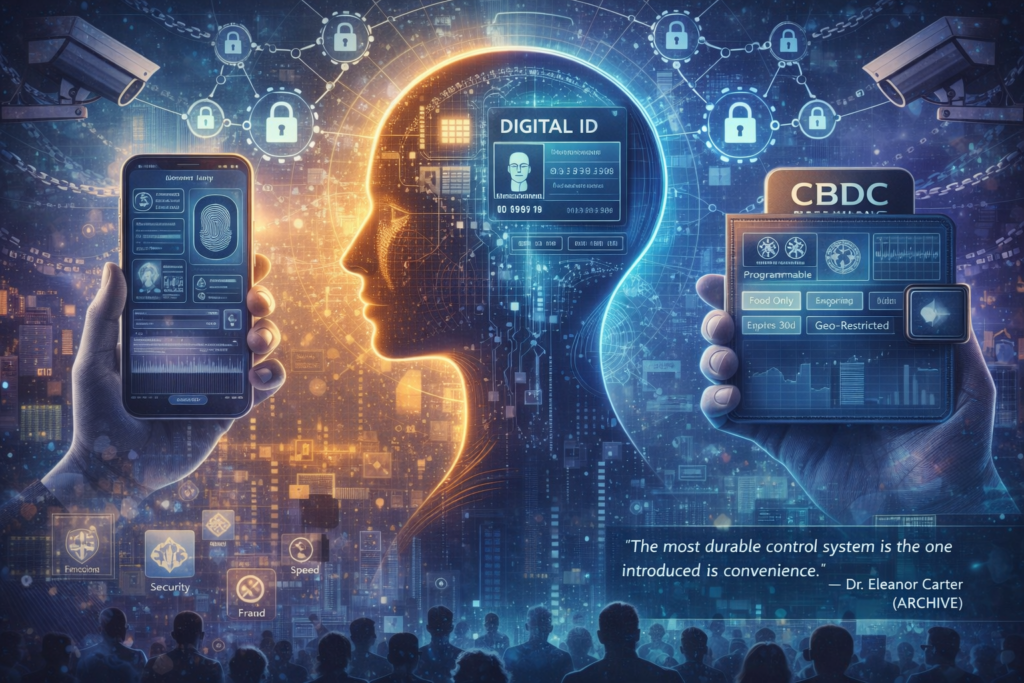
Digital identity standards and CBDC projects are documented. Technical interoperability and rule-based payments do not prove one operational global control grid.
How Smart Cities Became Control Cities

Smart-city systems can improve services and expand monitoring capacity. Governance, purpose and safeguards determine whether infrastructure becomes surveillance.
China’s Surveillance Grid Before COVID: The Roots of Digital Authoritarianism

China’s surveillance grid was not created by the pandemic. COVID-19 made parts of it more visible, but the cameras, biometric databases, platform controls, and local reporting systems were already being assembled before the crisis arrived.
Metadata in Schools: How Student Data Powers a Hidden Agenda

Education systems generate and share substantial student data under specific rules. The cited record does not prove one government-run student social-credit system.
Digital ID: The Seductive Convenience That Could End Privacy

Digital ID is sold as a fast upgrade: tap the phone, scan the face, move on. Every version of the pitch sounds reasonable on its own — fewer forms, shorter queues, faster fraud checks, one login instead of a dozen passwords. The friction really does disappear, and that is exactly why adoption spreads without anyone having to force it. What rarely gets said as plainly is what sits underneath the convenience: a single credential wired into government services, banks, travel systems, and private platforms, all able to check it on demand. The real dispute is not whether digital ID works. It is whether that convenience stays optional, or quietly becomes the default gate that everyday life has to pass through.
Predictive Policing: How AI Criminalizes Intent Before a Crime Exists

Predictive systems can influence patrol and scrutiny. A forecast is not a crime, and deployment claims require named policies, systems and outcomes.
The Disturbing Rise of Digital Classroom Surveillance

Digital education was sold as access, flexibility, and progress. In practice, much of it has also become a system of observation. Behind the clean interfaces of learning apps and virtual classrooms sits a growing surveillance stack that records not just attendance, but patterns of behavior, attention, movement, and risk.
E-Learning Surveillance: How Digital Classrooms Became Monitoring Zones

E-Learning Surveillance includes documented data and security risks. The cited record does not establish one permanent universal student score.
CBDCs – How Programmable Money Could End Economic Freedom

Central Bank Digital Currencies are pitched as modernization: faster payments, reduced fraud, and broader inclusion. But the structural shift runs deeper. Cash-like freedom can be replaced by ledger-based control. If money becomes code, then spending can become permission. The question is not whether CBDCs can improve efficiency. It is whether societies will accept the surveillance and programmability that can come with them.